
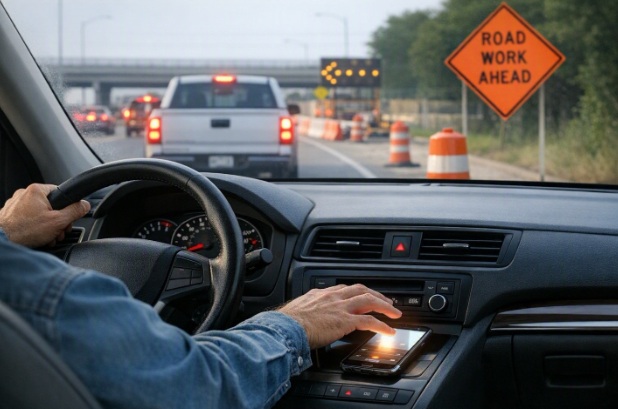
Distracted driving is more than a bad habit; it is a preventable safety risk that affects employees, families, agency operations, and the public we serve. For state employees, the issue is especially important because many drive as part of their duties, travel between worksites, respond to field needs, or operate in and around public roadways. Whether using a state vehicle, a personal vehicle for official business, or simply commuting, every driver has a responsibility to stay focused behind the wheel.
Why Distracted Driving Matters in Texas
Texas roadways carry a wide range of traffic: commuters, commercial vehicles, emergency first responders, road crews, school buses, pedestrians, cyclists, and state employees performing official duties. A momentary distraction can become a crash within seconds. The Texas Department of Transportation (TxDOT) identifies distracted driving as any activity that takes attention away from driving, including texting, talking on a phone, eating, grooming, adjusting navigation, or reaching for an item in the vehicle. Texas law also prohibits drivers from reading, writing, or sending electronic messages while driving, and violations may result in fines (Texas Transportation Code § 545.4251).
Three Forms of Distraction
Distracted driving often involves one or more of three types of distraction. These include visual, manual, and cognitive distractions. Visual distraction occurs when the driver looks away from the road. Manual distraction occurs when the driver takes one or both hands off the wheel. Cognitive distraction occurs when the driver’s mind is focused on something other than driving. Texting is especially dangerous because it combines all three: eyes off the road, hands off the wheel, and attention diverted from traffic conditions.
Workplace Concerns for Texas State Agencies
For state agencies, distracted driving is both a workplace safety concern and a public trust issue. Transportation incidents are one of the leading causes of work-related fatalities in Texas, and any employee who drives for work is operating in a mobile workplace. A crash can injure employees or members of the public, damage state property, interrupt essential services, increase workers’ compensation and liability costs, and affect agency credibility.
Employees may feel pressure to answer calls, respond to messages, check route updates, or address work issues while driving. However, urgency does not make distraction safe. State business can wait until the vehicle is safely parked. A culture that expects immediate response while an employee is driving can unintentionally increase risk, so agencies should reinforce that safe driving comes first.
Practical Steps to Reduce Risk
- Silence and store mobile devices before driving or use settings that block notifications and send automatic replies.
- Program navigation, adjust mirrors, set climate controls, and secure materials before the vehicle moves.
- Pull completely off the roadway and park safely before making calls, reading messages, or responding to work requests.
- Allow passengers to manage navigation or communications when appropriate and safe.
- Avoid eating, grooming, searching for items, or handling paperwork while driving.
- Plan travel time realistically so employees are not tempted to multitask or rush.
- Follow all applicable state laws, local ordinances, and agency vehicle-use policies.
How Supervisors and Teams Can Help
Supervisors play an important role in reducing distracted driving. They can set expectations that employees should not read or respond to messages while driving, schedule calls with travel time in mind, and avoid creating a workplace norm of immediate response during roadway travel. Teams can also support one another by asking, “Are you parked safely?” before discussing work by phone.
Agency safety programs should treat driving as part of the work environment. Written policies, periodic training, route planning, vehicle maintenance, and after-action review of incidents can help reduce risk. The most effective programs are practical, consistently communicated, and supported by leadership at every level.
A Shared Responsibility
Distracted driving is preventable. For Texas state agency personnel, choosing to drive without distraction protects lives, supports reliable public service, and demonstrates stewardship of state resources. Every trip should begin with a simple commitment: focus on driving, put distractions away, and arrive safely.